What to Do If Your Car Key Gets Wet at the Beach or Pool
What to Do If Your Car Key Gets Wet at the Beach or Pool
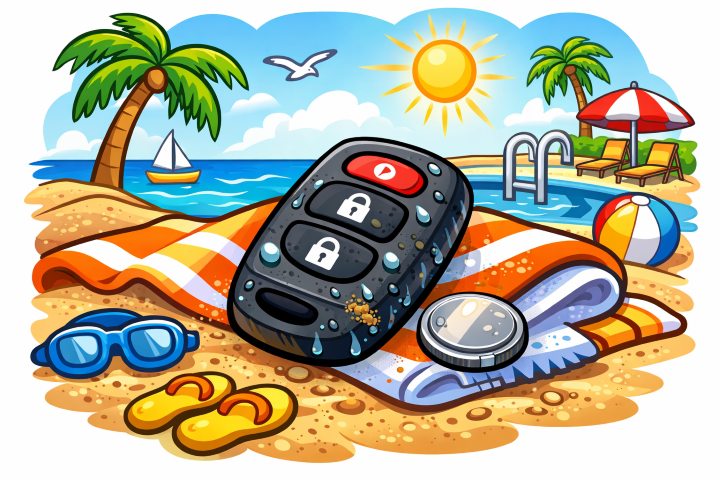
In South Florida, it’s extremely common for car keys to get wet. Whether you’re spending the day at the beach, relaxing by the pool, or dealing with sudden rain, water and electronics don’t mix. Modern car keys and key fobs contain sensitive electronic components that can be damaged quickly when exposed to moisture.
If your car key gets wet, taking the right steps immediately can make the difference between saving the key and needing a full replacement.
Step 1: Remove the Key From Water Immediately
The faster you remove the key from water, the better. Saltwater from the ocean is especially damaging because salt accelerates corrosion inside the key fob. Chlorinated pool water can also eat away at internal components.
Do not press any buttons while the key is wet. Pressing buttons can push moisture deeper into the electronics.
Step 2: Dry the Exterior Carefully
Use a clean towel to gently dry the outside of the key. If possible, open the key fob casing. Many key fobs can be opened with a small flat tool or coin. Removing the battery right away is critical to reduce the chance of short-circuiting.
Set the battery aside and dry it separately.

Step 3: Avoid Common Myths
Many people put wet keys in rice. While rice can absorb some moisture, it is not very effective for electronics, especially after saltwater exposure. Rice also does nothing to remove salt or chlorine residue that can continue damaging the circuit board.
Using a hair dryer is also risky. Heat can warp plastic and push moisture deeper into the key.
Step 4: Rinse After Saltwater Exposure (If Opened Quickly)
If the key was submerged in saltwater and you can open it right away, gently rinsing the circuit board with distilled water can help remove salt residue. This must be done carefully and followed by thorough drying. This step can sometimes reduce corrosion if done quickly.
Step 5: Let It Dry Completely
Allow the key and internal parts to air dry for at least 24 to 48 hours in a dry, well-ventilated area. Silica gel packs work much better than rice if you have them.
Do not reinstall the battery until you are confident everything is completely dry.
When to Call a Professional Locksmith
If your key still doesn’t work, or if it was exposed to saltwater for more than a short time, professional help is often the best option. A locksmith can test the key, check the transponder chip, and determine whether the key can be repaired or if replacement is necessary.
At A Lenny Locksmith in West Palm Beach, we deal with water-damaged car keys and key fobs every week. We can often save you money by repairing or reprogramming a damaged key instead of replacing it at full dealership cost.
If your car key got wet at the beach or pool and isn’t working properly, call A Lenny Locksmith West Palm Beach for fast, honest help from a local automotive locksmith you can trust.