
How to Secure French Doors Against Forced Entry in West Palm Beach
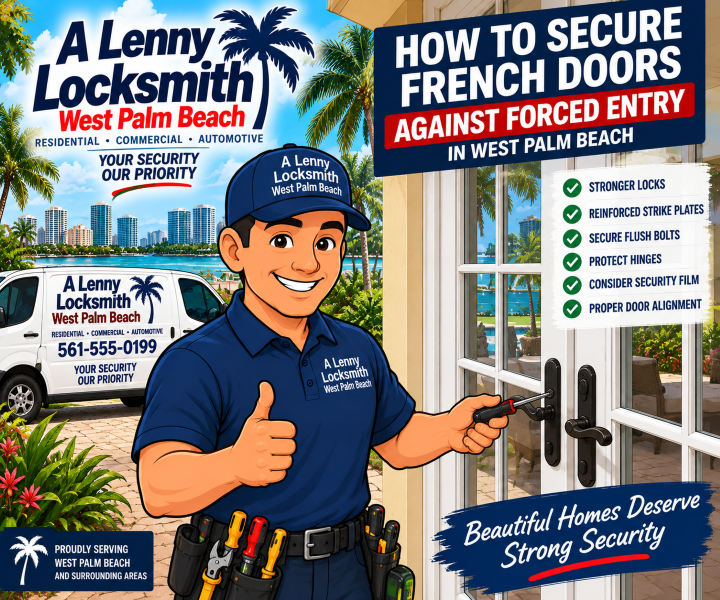
How to Secure French Doors Against Forced Entry in West Palm Beach
French doors add natural light, style, and an open feeling to many homes throughout West Palm Beach. They are especially popular on patios, pool areas, balconies, and entrances leading to backyards. While French doors look great, their design can create security weaknesses when the doors, locks, or surrounding hardware are not properly reinforced.
Unlike a traditional single exterior door, French doors usually meet in the center. One door is normally active while the second remains secured in place. That center connection can become a vulnerable point if the locking hardware is weak, worn, or improperly installed.
A Lenny Locksmith West Palm Beach helps homeowners improve door security without necessarily sacrificing the appearance and convenience that make French doors attractive.
Why French Doors Can Be Vulnerable
A burglar looking for an easy entry point may target a door that appears easier to force than the main entrance. French doors can attract attention because many contain large glass panels and rely heavily on the strength of the hardware where the two doors meet.
Potential weak points include:
- A basic lock without a strong deadbolt
- Short screws securing the strike plate
- Weak or improperly installed flush bolts
- Excessive movement between the two doors
- Exterior hinges with removable pins
- Large glass panels close to the inside lock
- Older locks and deteriorated hardware
The good news is that many of these weaknesses can be corrected.
Install a Quality Deadbolt
One of the most important upgrades is a strong deadbolt on the active door.
For an exterior French door, consider a quality Grade 1 or Grade 2 deadbolt with a solid bolt and properly installed strike hardware. The bolt should extend fully without requiring you to push or pull on the door.
A strong deadbolt will not provide its maximum protection if the surrounding hardware is weak. The entire locking system needs to work together.
Reinforce the Strike Area
The strike plate is the metal component that receives the deadbolt. Standard installations sometimes use relatively short screws that primarily attach to the door jamb.
For improved resistance against forced entry, longer appropriate screws can help secure reinforced hardware more firmly into the structural framing behind the jamb.
Homeowners should periodically check for:
- Loose strike plates
- Missing screws
- Cracked wood around the strike
- Misaligned deadbolts
- Excessive movement when the doors are closed
A door that moves considerably even while locked may need adjustment or additional reinforcement.
Secure the Inactive French Door
The inactive door is just as important as the door containing the primary lock.
Many French doors use flush bolts at the top and bottom to hold the inactive side in place. If those bolts are weak, loose, or barely engaging, forcing the inactive door may compromise the entire opening.
Make sure the upper and lower bolts:
- Extend completely
- Fit securely into their receivers
- Are constructed from durable material
- Do not move excessively
- Cannot easily disengage when the doors are closed
Upgrading weak flush bolts can make a significant difference in overall security.
Protect Exposed Hinges
Some French doors swing outward, which can place hinges on the exterior side.
Exterior hinges deserve special attention because standard removable hinge pins can potentially create another attack point.
Security options can include non-removable hinge pins, security hinges, or other hinge-side reinforcement designed to prevent the door from being removed even if someone tampers with the hinges.
Think About the Glass
French doors often contain beautiful glass panels, but glass located close to the lock creates another consideration.
Depending on the door design, homeowners may consider laminated security glass or professionally installed security film designed to make the glass more difficult to penetrate quickly.
Lock selection also matters when glass is located within reach of the interior hardware. However, any locking arrangement should also account for safe emergency exit requirements.
Don’t Ignore Door Alignment
Even expensive locks cannot perform properly when French doors are badly misaligned.
Florida humidity, regular use, settling, and worn hinges can eventually cause doors to shift. You may notice that you need to push one door inward or lift the handle before the deadbolt will lock.
Those symptoms should not be ignored.
Properly aligned French doors should close securely and allow the locking hardware to engage smoothly.
Check Your French Doors Regularly
Security hardware does not last forever. Periodically inspect French doors and look for:
- Loose handles or locks
- Rust or corrosion
- Worn flush bolts
- Loose hinges
- Cracked door frames
- Deadbolts that don’t fully extend
- Increasing gaps between the doors
Addressing a small problem early can prevent a larger repair and improve the security of the home.
Improve French Door Security in West Palm Beach
French doors don’t have to be a weak point in your home. Quality locks, reinforced strike hardware, secure flush bolts, protected hinges, proper alignment, and attention to glass security can create a much stronger entrance.
If you’re unsure whether your French doors are properly secured, A Lenny Locksmith West Palm Beach can inspect the existing hardware and recommend appropriate lock, reinforcement, repair, or replacement options for your particular doors.
Beautiful doors should provide more than a great view. They should help protect the people and property behind them.